

For years, Emirati foreign policy has been a disaster. Now, on the anniversary of the fundamentally flawed Abraham Accords, a rethink is underway
The fall of Afghanistan to the Taliban has triggered an earthquake that has travelled across the Gulf. The tectonic plates that defined who did what to whom in the region are shifting.
Alliances that only a year ago seemed to be set in concrete are cracking. The vacuum created by the US withdrawal from Afghanistan has been felt just as keenly in Riyadh, Abu Dhabi and Tel Aviv as it has in Kabul.
The clearest sign of swaying buildings and buckling tarmac are the pledges and significant amounts of money being promised by the de facto leader of the UAE to Turkey, states that are vigorous competitors for regional influence.
It is pragmatism, not a fundamental change of heart, that is causing the latest handbrake turn in Abu Dhabi’s foreign policy
And Turkey has not been the only sign of the apparent U-turn in UAE policy. Shortly after his recent meeting with Turkish President Recep Tayyip Erdogan, Tahnoun bin Zayed, UAE Crown Prince Mohammed bin Zayed’s brother and security chief, flew to mend fences with Qatar.
Only a year ago, the UAE was urging Saudi Arabia not to lift the blockade of Qatar. This latest visit is a recognition that the blockade was a spectacular failure. Qatar has emerged as US President Joe Biden’s strongest partner in the Gulf, and the one on whom he depended for evacuating Afghans and communicating with the Taliban.
How different from the start of the blockade, when Qatar was painted as a refuge for terrorists and Islamists, and former US President Donald Trump tweeted his approval of the Saudi action.
Billions promised
Erdogan is keeping the transcript of his recent telephone conversation with MBZ close to his chest. Only a trusted few know what the crown prince promised. According to my sources, MBZ offered Erdogan more than $10bn in investments.
Unlike the military side of the government of Sudan, or indeed President Kais Saied in Tunisia, Erdogan is not being made to wait long for the money to arrive. The Dubai-based courier Aramex is reportedly in talks to buy the Turkish delivery company MNG Kargo.
There is much secrecy in Ankara, but one thing is clear: the momentum for this reset is coming from Abu Dhabi. Erdogan is wary, and the foreign policy establishment in Turkey is sceptical. Both have good reason for caution.

This was the state that, according to Foreign Minister Mevlut Cavusoglu, spent $3bn attempting (and very nearly succeeding) to topple Erdogan on 15 July 2016. Cavusoglu did not name the UAE, but it was clear who he was referencing when he mentioned “a Muslim country”.
The same state funds neoconservative Washington think tanks that regularly debunk Erdogan and his ability to sustain the lira. It competes for influence with Turkey in Syria, Yemen, Libya, the Horn of Africa, Egypt and Tunisia. It was the brains behind, and one of the funders of, the counter-revolution that toppled former Egyptian President Mohamed Morsi – and it has tried repeatedly to rearrange the furniture in Tunisia, Sudan and Yemen. Emirati planes at one point provided air cover for renegade general Khalifa Haftar’s ill-fated attempt to recapture Tripoli.
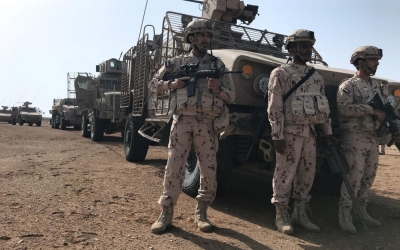
It has also created armies of “electronic flies” to condition public opinion through social media. The UAE’s interventions far beyond the Gulf have wreaked havoc throughout the Middle East.
Turkey has long been on the receiving end of this. So why would a leopard on a mission to hunt down political Islam and render it extinct, change its spots? It is not a question that can be convincingly answered.
Nor is this the first attempt at a kiss and make up: the UAE made a similar overture to Ankara when it thought Hillary Clinton would become US president. When Trump won, this was instantly dropped. It is pragmatism, not a fundamental change of heart, that is causing the latest handbrake turn in Abu Dhabi’s foreign policy. The sceptics in Ankara are right to be cautious.
Nevertheless, it could still be happening. The flood of signals coming out of Abu Dhabi towards Erdogan and Turkey mostly take place in private forums, and the message is consistent, even if you don’t believe it.
‘Strategic reassessment’
According to people with knowledge of these conversations, top UAE officials claim to be conducting a “strategic reassessment” of foreign policy.
It starts with Biden. The UAE noted two features of its changed relationship with Washington since his administration came to power: the first was a consistent message from the new US administration to “de-escalate” tensions in the Middle East. The second was the unpredictability of US foreign policy.
The new policy, then, is apparently to spread influence through economic cooperation, rather than military intervention and political competition
This was surely already apparent under Trump, when he refused to bomb Tehran after Iran and its Iraqi proxies sent armed drones to cripple two Saudi oil facilities, temporarily halving crude production. If ever Saudi Arabia and the UAE felt unprotected by the US military umbrella, it was then.
Coupled with this, they claim, is a hard-headed assessment of what the UAE has actually achieved. Its interventions have indeed beaten the Muslim Brotherhood back as a political force in Egypt, Tunisia, Yemen, Syria, and partly in Libya. But the cost of the UAE’s secular jihad is enormous.
Three of these countries are in smoking ruins, and the other two, Egypt and Tunisia, are nearly bankrupt. What has MBZ gained for the billions of dollars he has invested in Egyptian President Abdel Fattah el-Sisi?
The new policy, then, is apparently to spread influence through economic cooperation, rather than military intervention and political competition.
Saudi-UAE rift
They don’t say it, but when questioned, there is clearly also coolness with Riyadh. One emissary claimed that the UAE delayed its pullout from Yemen for a year to allow Saudi Arabia to end the war with the Houthis, but it is clear that Yemen is a sore point between the two military allies.
Saudi Arabia recently announced a series of moves to weaken Abu Dhabi, the latest being the pullout of Al Arabiya and parent media company MBC from Dubai. It has clamped down on tax-free goods from an Emirati free trade zone, as well as insisting that foreign multinationals base their headquarters in Riyadh rather than Dubai. There is a lot more sibling rivalry to the brotherly relations between the two Gulf countries these days.

Publicly, the UAE’s licensed political analysts are hinting at a different set of regional priorities. Political scientist Abdulkhaleq Abdulla tweeted that the main message from Washington was that the US would not defend the Gulf. “And the Arab Gulf states are at a crossroads; how should they adapt to the post-America Gulf stage?”
He answered his own question in a tweet a few days later: “These are the countries that the #UAE decided to give priority to investment and developing trade relations with them during the next 10 years: India, Indonesia, Turkey, Kenya, South Korea, Ethiopia, Israel, Britain.”
Spot the notable absences from this list: Saudi Arabia and Egypt, its closest allies in 2013.
Abraham Accords lose value
Abu Dhabi is not the only signatory of the Abraham Accords which is reassessing the value of a pro-US bloc in the Gulf. One year on from the signing in Washington, the Abraham Accords are losing their shine. A year ago, they seemed to have so much going for them. It was a marriage of brains and brawn, the military might and technological superiority of Israel with the dollars of the Gulf.

It was a way of bypassing the Palestinian conflict, without the need for messy, time-wasting things like negotiations, elections or popular mandates. The accords were a solution imposed from above – a fait accompli, which the Arab masses would have to live with.
But like the megacities of Saudi Arabia, the accords were built on shifting sands.
They had two fundamental flaws. Firstly, they depended on individual leaders – not states – meeting at first in secret as their drivers. This means that when two key players were removed from the picture – Trump and former Israeli Prime Minister Benjamin Netanyahu – the project itself lost sponsorship and momentum.
The other problem was that they were all about the relationship between regional states and the US. They did not address the fundamental problems of relations between the key regional actors themselves.
The UAE’s motive for moving closer to Israel was to cement its relationship with Washington. Recognition of Israel was always a means to an end, not the end in itself.

For Israel, on the other hand, the Abraham Accords were all about cementing its own security by increasing its regional influence. It fundamentally misread Arab intentions by conceiving of normalisation as a military and diplomatic safety net for its own continued existence.
Zvi Barel, writing in Haaretz, observed: “The kaleidoscopic shifting of international relations will require Israel to examine its place in the newly-forming alignment. The idea that there’s a pro-U.S. bloc that provides Israel with a military and diplomatic safety net and acts alongside it as an informal coalition against Iran, is beginning to fall apart.”
Regional realignment
The US not only supplied the carrots and sticks necessary to coerce states such as Sudan to join the accords, by removing it from its list of terrorist states. It was the very reason for the accords themselves.
The Emiratis, being quick off the mark, have seen the future shape of the post-oil world. Saudi Crown Prince Mohammed bin Salman (MBS) has yet to reconcile himself to the US military absence. Maybe he will now that Biden has just withdrawn his Patriot missiles from the kingdom and lifted the bar imposed by two of his predecessors to confidential documents on allegations of Saudi government links to two of the 9/11 hijackers.
It has taken eight long years for the penny to drop. But if indeed it has, this realisation presents a genuine opportunity to reshape a post-American Middle East
Unlike MBZ, MBS harbours personal grudges. He cannot forgive Erdogan for the role he played in keeping the murder of Saudi journalist Jamal Khashoggi on the agenda in Washington. In so doing, Erdogan permanently damaged MBS’s international reputation, making a repeat trip to London and the US impossible for the future Saudi king.
MBS’s psychology – for all its modernist patina of posing as a reformer – is still rooted in his Bedouin past. Being the future king, he considers and treats his people as his property. He is their lord and master. Deals with other states are made by him alone. He decides whether his kingdom will recognise Israel or whether, as is now the case, he could turn to Israel to provide him with missile defence systems.
Although all of these moves are brittle and by nature reversible, given that they are triggered by events outside the region and not within it, there could be light at the end of this dark, dark tunnel of permanent intervention. If regional actors themselves can establish a working relationship with each other – and no more than that is required – stability will not depend on a small group of despots.

Relations between regional powers are more likely to represent state interests, rather than the personal ones of their leaders. That in itself would be progress, if indeed any of this comes to fruition.
MBZ’s decision to reassess his foreign policy has to be genuine and not a temporary swerve. He is right to reassess his foreign policy. It has been a disaster, a complete waste of his money. It has weakened once strong states, such as Egypt, and caused massive refugee flows.
It has taken eight long years for the penny to drop. But if indeed it has, this realisation presents a genuine opportunity to reshape a post-American Middle East.
The views expressed in this article belong to the author and do not necessarily reflect the editorial policy of Middle East Eye.
This article is available in French on Middle East Eye French edition.