

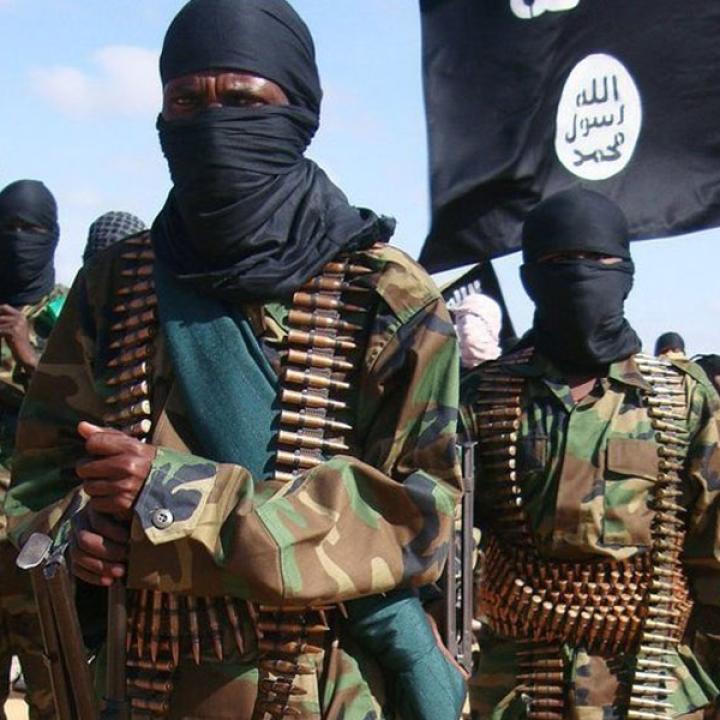
Preserving the UAE’s role and synchronizing it with Turkey and Qatar’s efforts could be a force multiplier for the Somali government’s offensive against al-Shabab.
The United Arab Emirates recently began reducing its funding for several Somali National Army (SNA) brigades, likely due to frustration with increasing Turkish and ongoing Qatari activities in the country. The particular trigger appears to have been a bilateral defense agreement committing Turkey to expand its military support to the SNA, initiate assistance to the Somali navy, and help patrol the country’s coastline—a deal the UAE itself likely coveted. Moreover, Qatar has continued providing substantial financial and military support to the Somali government, funding the UAE itself hoped to supplant in tandem with its ultimately increased support for the SNA.
The Turkey-Somalia agreement follows a major January deal allowing Ethiopia to operate for commercial and military purposes the UAE-refurbished port of Berbera, in the breakaway Somaliland region. This transaction alarmed Mogadishu, which disputes the independence of Somaliland. Although no UN member state currently recognizes the territory’s independence, Ethiopia has indicated it would break this barrier in exchange for the port arrangement. The Somali government warned it was “ready for a war” to prevent such an outcome, and President Hassan Sheikh Mohamud subsequently shuttled to Eritrea, Egypt, and Qatar to garner diplomatic support for his cause.
Yet the reduction came as a surprise amid renewed Emirati military support for Somali federal forces after the return to power of Hassan Sheikh, who has maintained close ties with the UAE. Since August 2022, his government has waged a large-scale military offensive against al-Qaeda–affiliated jihadist group Harakat al-Shabab al-Mujahedin (al-Shabab), which controls swaths of southern and central Somalia. Spearheaded by the elite U.S.-trained Danab Brigade, with American and Turkish air support, the government liberated significant territory in the country’s south and center. In mid-2023, in the run-up to an anticipated phase two of the campaign, UAE-funded SNA forces proved to be an asset in the fight against al-Shabab.
That SNA phase two, however, has yet to actually be launched, for reasons including an inability to hold recently liberated territories and field sufficient forces. The drawdown of forces from the African Union Transition Mission in Somalia (ATMIS), numbering 15,000 and scheduled to depart entirely by the end of 2024, makes the problem all the more urgent. Since 2007, ATMIS and its predecessor, the African Union Mission in Somalia (AMISOM), have played an indispensable role in recapturing Mogadishu, Kismayo, and other major population centers from al-Shabab and holding them. UAE-funded forces have demonstrated promise as replacements for departing ATMIS troops.
Growing UAE Military Involvement in Somalia
Emirati involvement in the decades-long Somali civil war stretches back to 1993–94, when the UAE contributed troops to United Nations humanitarian and peacekeeping operations. In 2010, Emirati advisors returned to oversee the creation of the Puntland Maritime Police Force (PMPF), which was founded to combat growing piracy and funded annually at about $50 million by Abu Dhabi. When the piracy threat subsided, the PMPF effectively transitioned into a counterterrorism mission, helping to suppress the jihadist insurgency in the Galgala mountains beginning in 2014, to repel a 2016 al-Shabab seaborne attack on Puntland, to lead that year’s liberation of Qandala from the recently formed Islamic State affiliate, and to secure Puntland’s major airports. Yet PMPF prowess in counterterrorism eventually came at the expense of its original mission, with piracy resurging off Puntland since November 2023, while rampant illegal fishing and Iranian weapons smuggling have continued unabated.
Since 2010, the UAE has developed a sizable base for the PMPF in Bosaso and increased its total presence in Somalia to as many as 180 troops. Fears, moreover, that the PMPF would become a harmful political tool for the Puntland administration have proven mostly overblown. The force has periodically been involved in political disputes, but the UAE has restrained it on important occasions such as the 2014 presidential transition and the Somaliland-Puntland clashes of 2018. Alongside major bases in Berbera, Somaliland, and Assab, Eritrea—which it used for operations against Yemen’s Houthis—the UAE foothold in Bosaso has augmented its Red Sea presence to not only facilitate operations in Yemen but also more easily counter Iranian smuggling.
Furthermore, in 2014 the UAE began training and paying salaries for thousands of Somali cadets. A 2018 row with the administration of President Mohamed Abdullahi “Farmajo” Mohamed ended the mission, but UAE training of SNA cadets resumed when Hassan Sheikh returned to power in 2022. Al-Shabab, apparently heeding the UAE’s contributions, recruited a former SNA cadet to strike General Gordon Camp in Mogadishu, killing four Emirati officers and one Bahraini officer.
At least since summer 2023, the UAE has conducted drone strikes and provided vehicles and training to Jubaland state forces, whose longtime leader, Ahmed Mohamed Islam, maintains close ties with Abu Dhabi. The UAE is likely now building another base near the Jubaland capital, Kismayo.
In parallel, the UAE has invested in helping create a new federal military police unit and several army brigades, having provided—until recently—the funding for 10,000 personnel, with the 3,500–4,500-person military police unit having trained in Uganda, and the rest, forming new regular army brigades, doing so in Ethiopia and Egypt. The UAE regularly retrained the deployed soldiers at Camp Gordon and provided about $9 million per month to pay the new brigades.During last year’s Ramadan, a period that typically sees increased jihadist violence, the military police unit’s activities helped keep Mogadishu free of terrorist attacks and thus earned local respect. Some of the new brigades have since moved to the capital’s outskirts and will constitute a major component of the government’s continuing campaign. Emirati support for these troops is one element in a larger push to generate 30,000 military, 40,000 police, and 8,500 prison guard forces to replace ATMIS and support the government’s campaign, according to a presidential advisor.
An Effective Emirati Training Model
Parallel training efforts by the United States, the European Union, Turkey, and Britain have generally fallen short because most SNA brigades are, in fact, clan militias beholden to the interests of their respective elders. As a result, SNA units—no matter the quality of their training—have mostly pursued clan interests and proven ineffective at fighting al-Shabab, especially outside their own lands. Alongside the Danab Brigade, only the Turkish-trained Gorgor special forces are truly capable of offensive operations, but Turkey has not taken sufficient steps to protect it from political misuse. In the case of Danab, the United States has circumvented this problem by recruiting cadets from a diverse array of clans, setting up a command-and-control system insulated from politics, ensuring on-time pay, and training carefully vetted cadets separately from the regular forces.
The UAE has implemented similar measures for the units it trains, including by intentionally maintaining multi-clan representation among its trainees. It also names combat veterans to lead units and monitors new units through a continuous retraining program at Camp Gordon. Finally, it provides on-time salaries at about twice the regular SNA rate.
Implications of the Current Crisis
UAE-trained forces are currently the most promising replacements for the ATMIS presence, and the withdrawal of Emirati support threatens to hinder the government’s campaign against al-Shabab. To be sure, the Emirates has ample reason to resume its earlier funding levels for the SNA. Al-Shabab conducts illicit financing activities inside the UAE, and U.S. Department of Treasury sanctions regularly target UAE-based individuals and companies with links to the Somali jihadist group. Effective in-country counterterrorism forces offer the best means of targeting the personal transnational networks of al-Shabab operatives. Also justifying a strong Emirati role are al-Shabab’s close links to al-Qaeda in the Arabian Peninsula—a UAE nemesis—and the group’s receipt of Iran-smuggled weapons.
UAE-sponsored forces have shown much promise, whereas other countries have generally struggled to build reliable SNA brigades. Indeed, the UAE has emerged as a leading practitioner of “by, with, and through” operations, and a strong Emirati position will allow more focused U.S. attention on reinforcing the elite Danab Brigade. A “trilateral operations” model, which saw success in Yemen, could thus possibly arise in Somalia.
In addition to persuading Abu Dhabi behind the scenes to resume its previous levels of SNA funding, Washington should use its good relations with the three Middle East rivals in Somalia to encourage coordination of efforts. Ultimately, the UAE, Turkey, and Qatar are assisting the SNA in positive ways. A robust coordination mechanism, perhaps a U.S.-run joint operations center, could help make the contributions of each greater than the sum of their parts. Such an institution could also increase transparency among the three while mitigating the risk that their geopolitical rivalry will compromise the fight against al-Shabab.
Ido Levy is an associate fellow with The Washington Institute’s Military and Security Studies Program and a PhD student at American University’s School of International Service.