

What's Hot

    Storm Clouds Over the Eritrean–Ethiopian Border: How the UAE is Financing a Proxy War Over Assab for Israel By Dr. Bischara Ali Egal September 11, 202

    October 18, 2025

    Civilians loot weapons from vessel intercepted off Somalia coast .By Somali Guardian . July20, 2025

    July 22, 2025

    1 FAITH, FLAGS, AND FEDERALISM: U.S. AND HERITAGE FOUNDATION PROJECTS IN SOMALIA, 2000–2025. BY DR. BISCHARA ALI EGAL,July 21, 2025

    July 22, 2025
    Facebook X (Twitter) Instagram
    Facebook X (Twitter) Instagram
    Horn ObserversHorn Observers
    Subscribe
    • Horn Of Africa
    • North America
    • News By Country
      • Russia
      • Ukraine
      • Turkey
      • Canada
      • China
      • France
      • UK
      • Israel
      • Palestine
      • Germany
      • India
      • Pakistan
      • Egypt
      • Iraq
      • Afghanistan
      • Italy
      • Lebanon
      • Malaysia
      • North Korea
    • Arabian Peninsula
      • Saudi Arabia
      • UAE
      • Qatar
      • Oman
      • Iran
      • Afghanistan
      • Kazakistan
    • Global Research
    • Videos
    Horn ObserversHorn Observers
    Home»North America»USA»US hostility towards the ICC is nothing new – it supports the court only when it suits American interests
    USA

    US hostility towards the ICC is nothing new – it supports the court only when it suits American interests

    By Andrea FurgerMay 23, 2024Updated:May 26, 2024No Comments6 Mins Read
    Facebook Twitter LinkedIn Telegram Pinterest Tumblr Reddit WhatsApp Email
    US hostility towards the ICC is nothing new – it supports the court only when it suits American interests
    Share
    Facebook Twitter LinkedIn Pinterest Email
    US hostility towards the ICC is nothing new – it supports the court only when it suits American interests

    This week, the prosecutor of the International Criminal Court (ICC) applied for arrest warrants for three Hamas leaders, as well as Israeli Prime Minister Netanyahu and Defence Minister Yoav Gallant, in connection with the ongoing war in Gaza.

    The reaction of the United States, Israel’s main backer, was swift. President Joe Biden condemned the prosecutor’s action against Israel’s leaders as “outrageous” and accused the ICC of drawing false moral equivalence between Hamas and Israel.

    While it is not yet clear if the ICC’s judges will decide to issue the warrants for Netanyahu and Gallant, the Biden administration has already hinted at the possibility of imposing US sanctionsagainst ICC officials.

    Yet, just a year ago, when the ICC issued arrest warrants for Russian President Vladimir Putin and another Russian official for alleged international crimes in the Ukraine war, US officials were full of praise for the court. Biden welcomed the action, calling it “justified”.

    Since the Russian invasion of Ukraine, in fact, the US has continually displayed its support for the ICC. One top US official, the ambassador-at-large for global criminal justice, said the ICC “occupies an important place in the ecosystem of international justice”.

    The US’ apparent about-face when the court targeted its ally is nothing new. Nor is it surprising.

    Rather, this vacillating approach is merely symptomatic of the US’ complicated relationship with the ICC since its creation in 1998. Its hostile reaction to the Israel-Palestine situation will certainly have been expected by court officials.


    Wariness from the court’s inception

    I worked for many years as a cooperation advisor at the ICC’s office of the prosecutor. During that time, Washington’s position towards the court shifted several times – it supported the court at certain times and criticised it at others.

    This has largely been tied to a broader assessment of US foreign policy goals and the anticipated costs and benefits that supporting the court could bring.

    The US was initially a keen supporter of the creation of a permanent international criminal court and was an active participant in the ICC treaty negotiations in the 1990s.

    But it ultimately voted against the Rome Statute that created the court in 1998 due to concerns with the court’s jurisdictional framework. The US feared it could allow for the prosecution of Americans without US consent.

    Although the US still signed the Rome Statute, President George W. Bush later effectively unsigned it, saying the US would not ratify the document and had no legal obligations to it.

    The US remains a non-member state to the ICC today.

    Once the ICC was created, the US adopted laws to restrict its interactions with the new court. Most importantly, it passed the American Servicemembers’ Protection Act of 2002 (ASPA) that prohibited providing any support to the ICC.

    This law also allowed the US president to use “all means necessary” – a phrase understood to include armed force – to free American officials or servicemembers should they ever be detained for prosecution in The Hague, the seat of the ICC. This earned it the nickname of “The Hague Invasion Act”.

    That same year, however, an amendment was passed to the law allowing exceptions for when the US could assist international courts to bring to justice:

    Saddam Hussein, Slobodan Milosovic, Osama bin Laden, other members of al-Qaeda, leaders of Islamic Jihad and other foreign nationals.

    The amendment created significant flexibility, demonstrating that the US was ready to assist international justice efforts as long as they targeted designated US “enemies” or other foreign nationals.

    US support in African cases

    The US soon adopted a pragmatic approach towards the court, supporting its activities depending on the circumstances and its interests.

    In 2005, Washington allowed a UN Security Council referral to the ICC in relation to possible genocide and war crimes committed in Darfur, Sudan. The conflict was among the US’ top foreign policy priorities in Africa at the time.

    Later, the Obama administration formally adopted a “case-by-case” strategy to cooperate with the ICC when it aligned with US interests.

    Under this policy, the US played an important role in the 2011 referral of alleged crimes against humanity and war crimes committed in Libya to the ICC. This was, again, in line with US foreign policy interests.

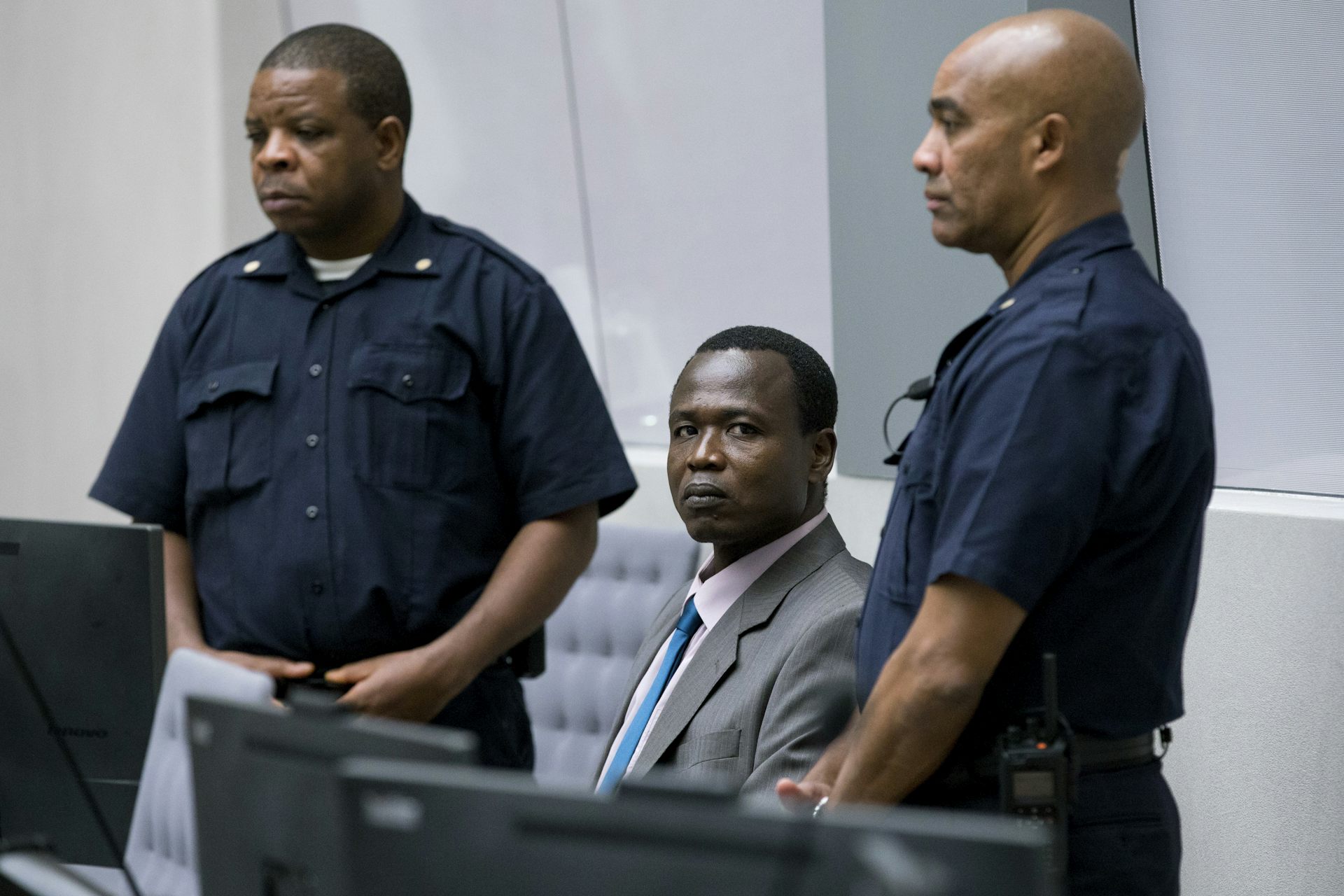
    US diplomats also provided vital support in the arrest of Congolese warlord Bosco Ntaganda, who was later sentenced to 30 years in prison by the ICC for war crimes and crimes against humanity. And the US assisted with the arrest of Dominic Ongwen of the Lord’s Resistance Army in Uganda, who was later sentenced to 25 years.
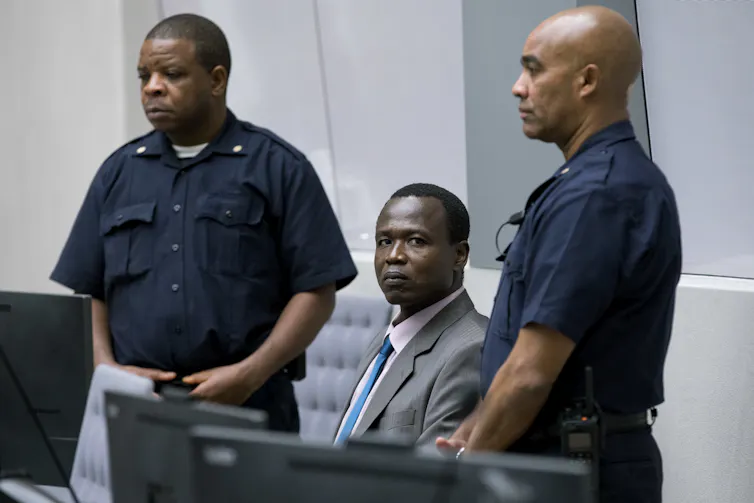
    Dominic Ongwen at the ICC.
    In this 2016 photo, Dominic Ongwen, a senior commander in the Lord’s Resistance Army enters the courtroom of the ICC. Peter Dejong/AP Pool

    Another falling out over Afghanistan

    The relationship between the US and the court soon soured again, though, during the Trump administration.

    This was in part because of developments in the ICC’s investigation into alleged crimes committed in Afghanistan, which marked the first time the court probed possible crimes committed by US forces.

    In 2020, ICC judges authorised an investigation into US, Afghan and Taliban forces. Soon after, the US imposed sanctions on the ICC prosecutor, Fatou Bensouda, and another senior ICC official.

    After some delays, the investigation is continuing again, with a focus solely on crimes allegedly committed by the Taliban and Islamic State Khorasan Province. Other aspects of the investigation have been “deprioritised”, an implicit reference to the US and its allies.
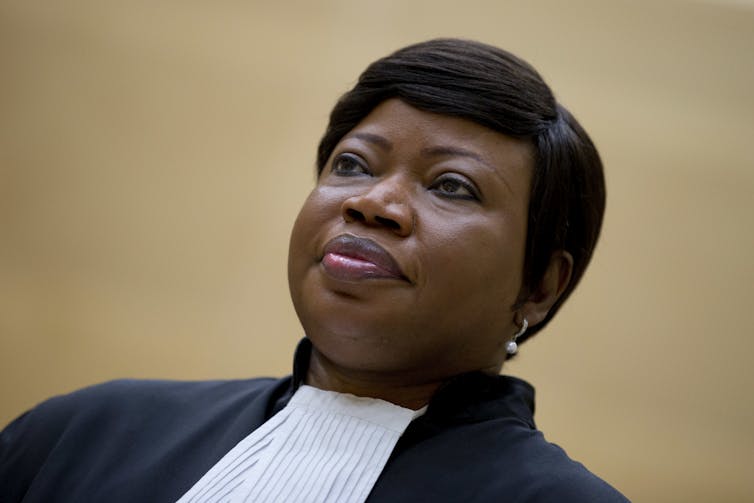
    Fatou Bensouda, former ICC prosecutor.
    Fatou Bensouda, the chief prosecutor of the ICC until 2021. Peter Dejong/AP Pool

    Soon after taking office, the Biden administration lifted the sanctions against the ICC officials, returning to a seemingly more collaborative period in US-ICC relations.

    These relations became closer following the Russian invasion of Ukraine, with the adoption of new laws that broadened the possibilities of US cooperation with the court. The goals of the US and ICC had seemingly aligned again, at least for the time being.

    But this week’s request for arrest warrants for Israeli leaders demonstrates yet another shift in the US approach to the court. It continues the pattern of the US supporting the court when it suits it, prioritising its own foreign policy goals over wider international criminal justice efforts.

    Share. Facebook Twitter Pinterest LinkedIn Tumblr Telegram Email
    Previous ArticleMoT #619 Bootlick Jamboree, Kenya’s President Visits The CBC
    Next Article The Horn Of Africa States: The Expanding Foreign Footprints – OpEd
    Andrea Furger

    Related Posts

    1 FAITH, FLAGS, AND FEDERALISM: U.S. AND HERITAGE FOUNDATION PROJECTS IN SOMALIA, 2000–2025. BY DR. BISCHARA ALI EGAL,July 21, 2025

    July 22, 2025

    Trump Orders Iran to Give Up Its “Perfectly Legal” Defensive Weapons

    April 7, 2025

    Is President Trump an Israeli Puppet? Dr. Paul Craig Roberts • March 10, 2025

    March 11, 2025

    Storm Clouds Over the Eritrean–Ethiopian Border: How the UAE is Financing a Proxy War Over Assab for Israel By Dr. Bischara Ali Egal September 11, 202

    Horn Of Africa October 18, 2025

    Storm Clouds Over the Eritrean–Ethiopian Border: How the UAE is Financing a Proxy War Over…

    Civilians loot weapons from vessel intercepted off Somalia coast .By Somali Guardian . July20, 2025

    Sudan & Uganda July 22, 2025

    https://somaliguardian.com/news/somalia-news/civilians-loot-weapons-from-vessel-intercepted-off-somalia-coast/ MOGADISHU (Somaliguardian) – A portion of a weapons shipment onboard a vessel seized by…

    1 FAITH, FLAGS, AND FEDERALISM: U.S. AND HERITAGE FOUNDATION PROJECTS IN SOMALIA, 2000–2025. BY DR. BISCHARA ALI EGAL,July 21, 2025

    Sudan July 22, 2025

    https://drbischaragmailcom.substack.com/p/1-faith-flags-and-federalism-us-and FAITH, FLAGS, AND FEDERALISM: U.S. AND HERITAGE FOUNDATION PROJECTS IN SOMALIA, 2000–2025. BY DR.…

    Sudan orders halt to South Sudan oil exports citing RSF attacks. Editor’sPICK MAY 10, 2025

    Horn Of Africa May 12, 2025

    https://sudantribune.com/article300736/ May 10, 2025 (JUBA) – Sudan has directed oil companies to begin shutting down…

    Turkey doubles troops in Somalia amid Al-Shabab offensive Ankara sends drones, ammunition, commandos but still avoids directly engaging the armed Somali group on the ground.BY By Ragip Soylu in Ankara and MEE correspondent Published date: 25 April 2025

    Turkey April 29, 2025

    https://www.middleeasteye.net/news/turkey-doubles-troops-somalia-amid-al-shabab-offensive?utm_source=Middle+East+Eye&utm_campaign=23b1406c83-EMAIL_CAMPAIGN_2025_04_28_01_25&utm_medium=email&utm_term=0_-23b1406c83-273654842 Turkey doubles troops in Somalia amid Al-Shabab offensive Ankara sends drones, ammunition, commandos…

    Top Posts

    Storm Clouds Over the Eritrean–Ethiopian Border: How the UAE is Financing a Proxy War Over Assab for Israel By Dr. Bischara Ali Egal September 11, 202

    October 18, 2025

    Civilians loot weapons from vessel intercepted off Somalia coast .By Somali Guardian . July20, 2025

    July 22, 2025

    1 FAITH, FLAGS, AND FEDERALISM: U.S. AND HERITAGE FOUNDATION PROJECTS IN SOMALIA, 2000–2025. BY DR. BISCHARA ALI EGAL,July 21, 2025

    July 22, 2025

    Subscribe to Updates

    Get the latest sports news from SportsSite about soccer, football and tennis.

    Horn Observers is an online platform Founded by Prof. Dr. Bischara Ali Egal in Mogadishu, featuring a plurality of voices and views of the African horn people. Committed to encouraging open debate on matters not adequately covered by traditional media.

    Contact us: [email protected]

    Facebook X (Twitter) YouTube
    Top Insights

    Storm Clouds Over the Eritrean–Ethiopian Border: How the UAE is Financing a Proxy War Over Assab for Israel By Dr. Bischara Ali Egal September 11, 202

    October 18, 2025

    Civilians loot weapons from vessel intercepted off Somalia coast .By Somali Guardian . July20, 2025

    July 22, 2025

    1 FAITH, FLAGS, AND FEDERALISM: U.S. AND HERITAGE FOUNDATION PROJECTS IN SOMALIA, 2000–2025. BY DR. BISCHARA ALI EGAL,July 21, 2025

    July 22, 2025
    Get Informed

    Subscribe to Updates

    Get the latest creative news from FooBar about art, design and business.

    © 2026 HornObservers. All rights reserved.
    • Home
    • North America
    • Horn Of Africa
    • Arabian Peninsula
    • Videos

    Type above and press Enter to search. Press Esc to cancel.