

Own goal: Cameron Leckie says the Western response to Russia’s invasion of Ukraine is rapidly accelerating what had been a more drawn-out process.
Most of the debate and coverage of the ongoing Russo-Ukrainian war in Australia and the Western world is decidedly banal. It is characterized by the simplification of an extremely complex situation to generate a narrative that can be summarized as Putin and Russia are evil and Ukraine is good.
This gross simplification is not helpful in either understanding the causes of the war, the nature of the war, its broader implications and most importantly of all, how it can be ended with the least number of additional deaths and injuries and damage to Ukraine’s infrastructure.
The preponderance of human-interest reporting of the conflict in lieu of coverage of the war itself is illustrative. The heartbreaking examples of families torn asunder along with the brave exploits of Ukrainian soldiers or allegations of war crimes by Russia, whilst important, tends to trigger an emotional response rather than provide an accurate depiction of the course of events.
Partly this is because very few mainstream Western reporters, if any, appear to be located where the bulk of the fighting is, namely in the Donbass and around Mariupol. The resulting vacuum is filled by claims, many unverified and unverifiable, from the Ukrainian side, the aforementioned human-interest stories or the impact of missile strikes in and around the major cities. Truth has long been described as the first casualty of war. It would be unwise to think that this conflict is an exception. We should thus take a healthy dose of skepticism about the media reporting and analysis of the war — from all sides.
A narrative that seems to be gaining traction is that the Russian forces have culminated and Ukraine may actually be winning. This narrative could well be wishful thinking, influenced by the desire for Russia to lose, the overwhelming pro-Ukrainian bias of reporting and analysis and a misunderstanding of Russia’s aims and strategy.
‘Economy of Effort’ Operation
The Russian military is running an “economy of effort” operation. It has effectively fixed in place the garrisons defending Ukraine’s major cities leaving them incapable of supporting the troops in the Donbass.
Meanwhile Russia is progressively destroying the military infrastructure of the Ukraine (resupply, maintenance and command and control facilities and weapon systems such as air defense, artillery and armored vehicles) through a combination of air strikes, cruise missiles, rockets and traditional artillery across the breadth and depth of Ukraine.
Approximately 60,000 of Ukraine’s best trained and equipped troops are located in the Donbass. It would appear unlikely that this force is capable of anything other than localized tactical level manoeuvre at this point due to a combination of ever dwindling supplies of ammunition, fuel and rations, Russia’s dominance in the air and ground based combat power, and the effects of combat to date.
Despite the alleged incompetence of the handling of the initial stages of the war, the Pentagon assesses that the Russian forces still retain nearly 90 percent of the initial combat power assigned to the invasion.
With Russian forces on the verge of completing the capture of Mariupol, it will only be a matter of time before the Ukrainian forces in the Donbass are fully encircled and subsequently destroyed or forced to surrender. Whilst there may be many weeks, or even months of fighting ahead, the writing is on the wall that Russia, barring outside intervention (i.e. NATO — which has repeatedly ruled out direct military intervention), will achieve its military objectives.
The direct Russo-Ukraine conflict is however just one level of this conflict. Ukraine is actually an unfortunate pawn in the much bigger conflict. As long time Russia analyst Gilbert Doctorow notes this is a
“full-blown proxy war between the United States of America and the Russian Federation, and it is about ending or perpetuating American global hegemony.”
Whilst the war in Ukraine will end sooner or later, the implications at a global scale of this proxy war will be of much greater consequence for a much greater period of time.
Western Response
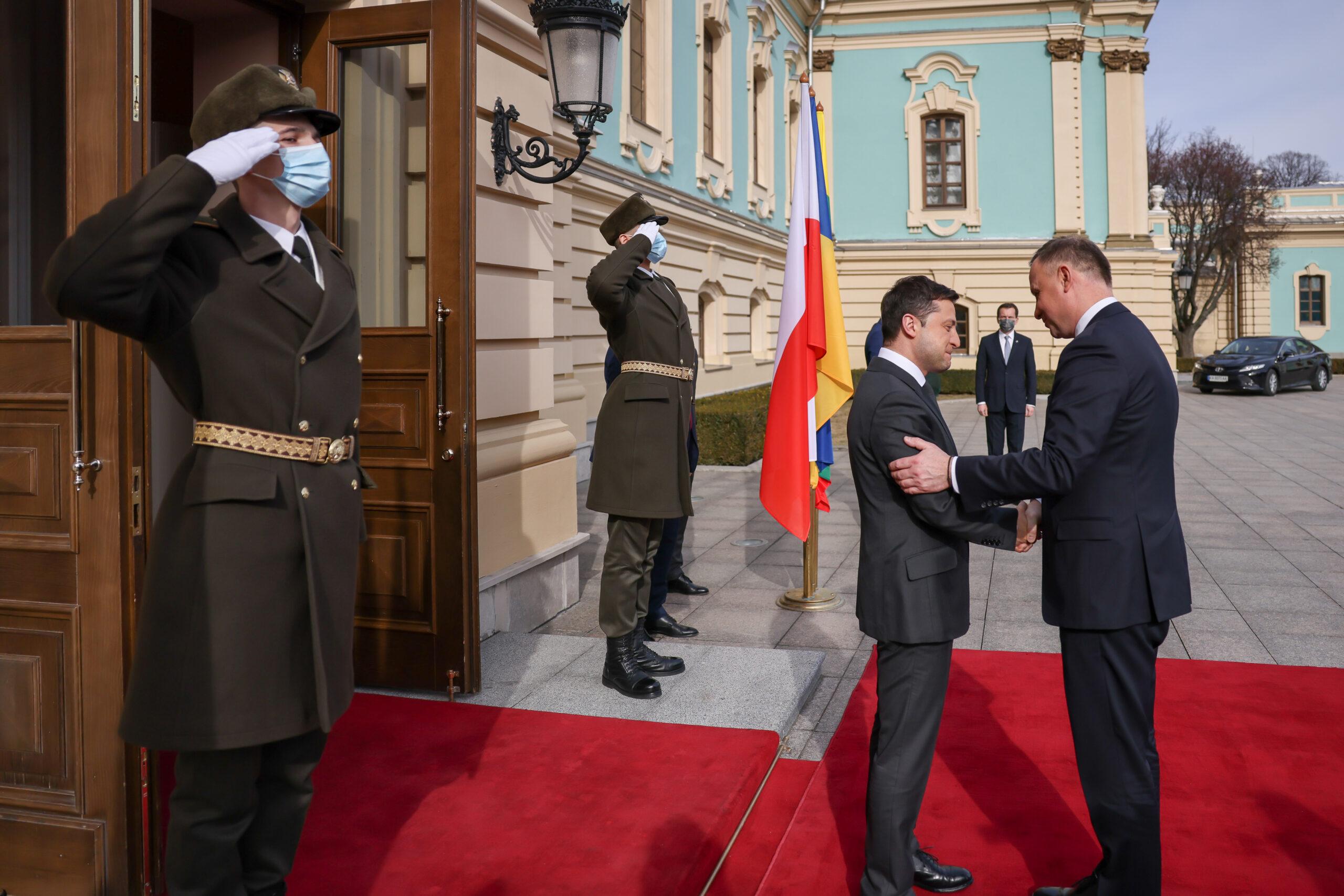
Ukraine President Volodymyr Zelensky, left, with Andrzej Duda, during the Polish president’s visit in Kiev on Feb. 23. (Jakub Szymczuk, Kancelaria President RP, CC BY-SA 4.0, Wikimedia Commons)
The Western response to Russia’s invasion has been to substantially increase its military aid to Ukraine (which is unlikely to change the outcome of the war) and implement economic (and cultural) sanctions of an unprecedented scale and nature on Russia.
This approach is unlikely to work for multiple reasons, the primary one being as I stated in my last article that there “are no sanctions that the U.S. or Europe can implement that will not have a greater impact upon those countries than on Russia or create further divisions among the Western powers.”
Whilst the sanctions will have a disruptive and negative effect on the Russian economy, they will not be devastating for the simple fact that Russia is too important to the global economy. The initial shock of the sanctions did not cause a collapse of the Russian financial system, nor did it result in a bank run. The ruble has already regained some of its value versus the U.S. dollar and Russia has (for now) made bond repayments.
Far from Isolated
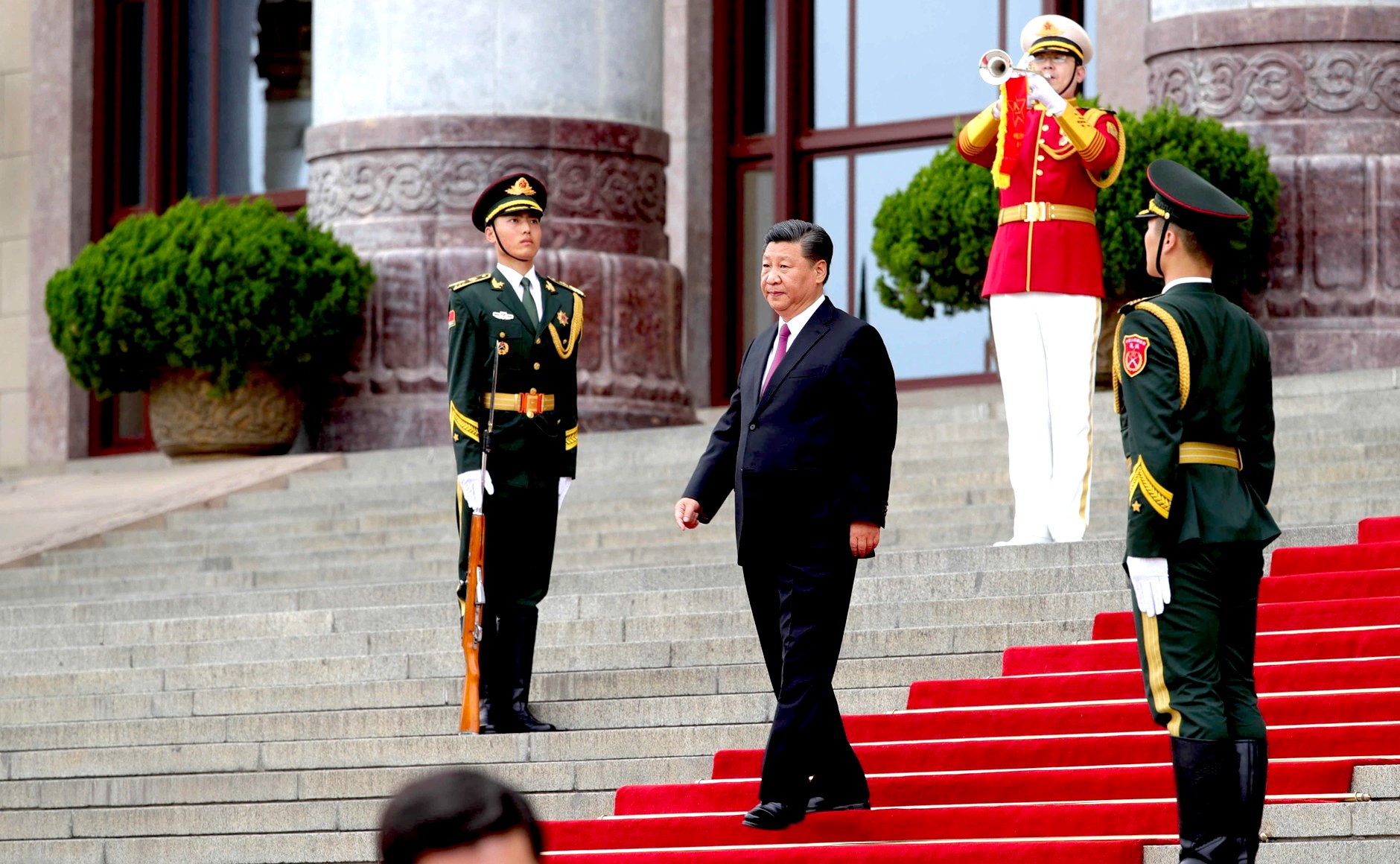
June 8, 2018: Chinese President Xi Jinping welcoming Russian President Vladimir Putin on a state visit. (Kremlin.ru, CC BY 4.0, Wikimedia Commons)
Russia is far from being isolated. Whilst a majority of countries voted against Russia at the United Nations General Assembly, of more importance is the countries that are not sanctioning Russia. Outside of the West virtually no country is sanctioning Russia, including the world’s two most populous, China and India with the world’s second and sixth largest economies.
Russia has many willing buyers for its energy, mineral and agricultural produce. Countries not on Russia’s “unfriendly country list” will receive preferential deals for exports as already evidenced by the rupee-ruble oil mechanism with India and a natural gas and grain deal with Pakistan.
The impact of Western businesses withdrawing from Russia, whilst causing short-to-medium term disruptions, will in the longer term be managed through an expansion of Russia’s import-substitution policies and sourcing goods from other countries.
There are already reports that the sale of Chinese mobile phones in Russia have more than doubled whilst the Chinese financial company UnionPay is replacing VISA and Mastercard. The effect of the sanctions policy may very well be the permanent gifting of a market of 140 million people to Chinese and Indian businesses.
Prior to the war commencing many countries, including the United States and in Europe, were facing an inflationary crisis, largely driven by the surging costs of energy. That situation is now much worse. Europe is already suffering energy shortages. Attempts to replace Russian energy will be time consuming and difficult. The Serbian president describes the situation as follows:
“We cannot just destroy ourselves. If we impose sanctions on Russia in the oil and gas domain, we will destroy ourselves. It’s like shooting yourself in the foot before rushing into a fight.”
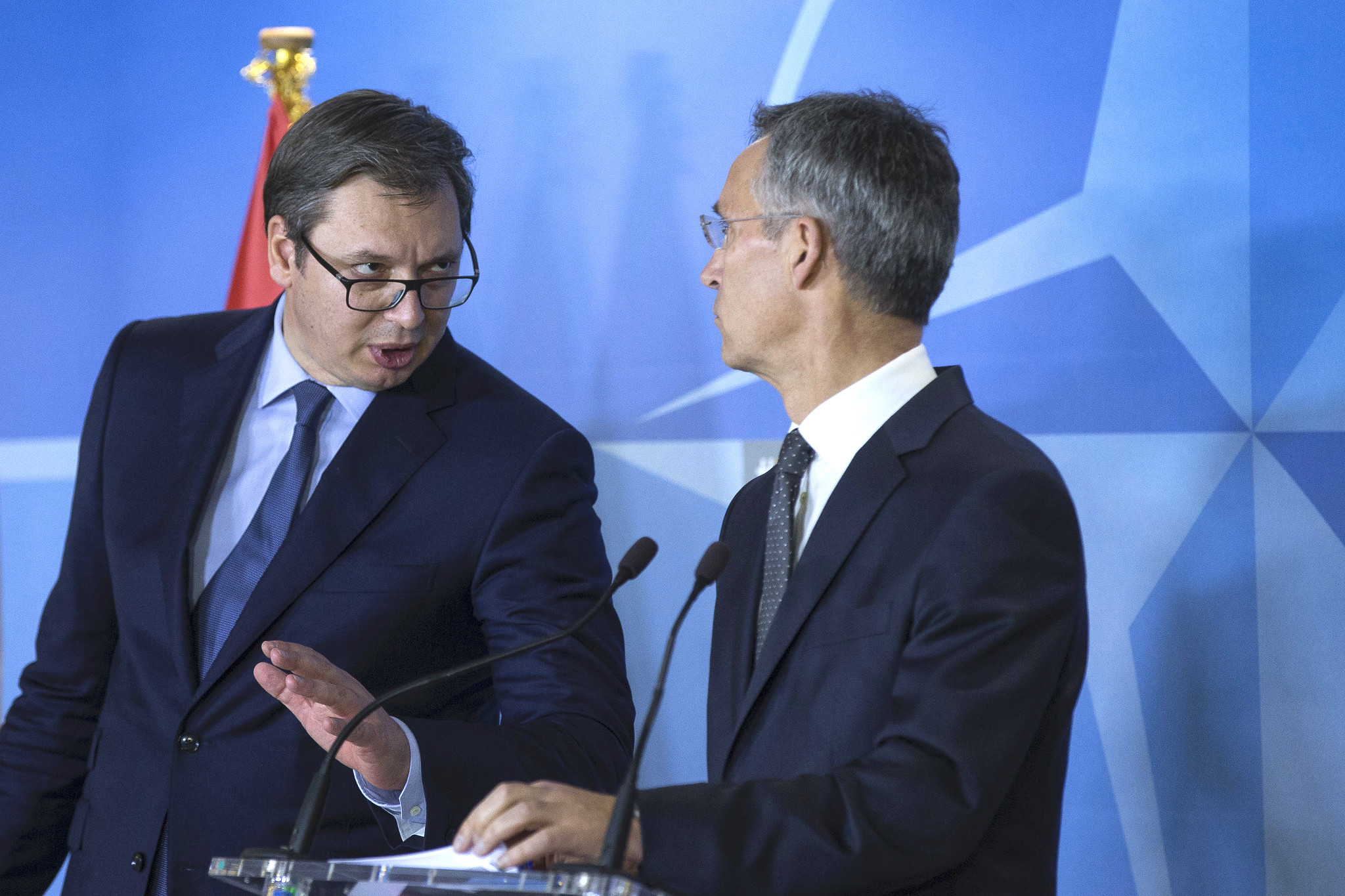
Nov. 15, 2017: Serbian President Aleksandar Vucic, left, with NATO Secretary General Jens Stoltenberg. (NATO)
The net effect of the sanctions policy for Europe in particular is likely to be structurally higher prices for raw materials (energy, base minerals, fertilizers, etc.) and precarious supply chains for the foreseeable future. Standards of living will drop and the nascent cost of living protests that are emerging across Europe will likely turn into major domestic political crises.
De-dollarization
The sanctions, including the unprecedented freezing of a central banks assets, are also undermining trust in the Western financial system. The trend towards de-dollarization will rapidly accelerate from here on as countries seek to minimize the risk of trading with the U.S. dollar.
The influence of Western powers is dwindling around the world. The leaders of the UAE and Saudi Arabia have refused to accept calls from President Joe Biden — unthinkable even a few years ago. The recent cancellation of a U.K. delegation to India and both India and China’s unwillingness to “toe” the Western line towards Russia being other key indicators.
It seems clear that the Western powers have overestimated the impact that the sanctions would have on Russia, had not fully thought through the implications, were unprepared for the consequences and have no feasible way of reversing their actions. Meanwhile the majority of the world’s countries will continue to trade and maintain their relationship with Russia for the simple reason that it is in their interests to do so.
Kishore Mahbubani predicted that it will be an Asian 21st century. Prior to Feb. 24, the progress of the transition of the balance-of-power from West to East was progressing as a drawn-out process occurring over a decadal timeframe. However, the Western response to Russia’s invasion of Ukraine is rapidly accelerating this process – an own goal.
There is a good chance that 2022 will in hindsight be viewed as the decisive tipping point. Unfortunately, the penny has not yet dropped with Western governments and their compliant media of what their actions have triggered. Enlightened self-interest suggests that a major change in direction is required in the West, Australia included, to make the best of a bad situation.
Cameron Leckie served as an officer in the Australian Army for 24 years. An agricultural engineer, he is currently a PhD candidate.