

In March 2003, then President George W Bush approved the military attack, with major repercussions for US politics, and global perceptions of the country
Twenty years ago, the world was shaken by one of the major geopolitical events of this century. On the morning of March 20, 2003, the US officially launched its illegal invasion of Iraq. The rationale was based on Iraqi President Saddam Hussein’s alleged ties with terrorists, and intelligence regarding the presence of weapons of mass destruction in Iraq. However, both claims turned out to be false and were later refuted.
Russian political analysts believe that the real reasons behind the invasion of Iraq included a desire for control over oil fields, the naive hope of creating a ‘showcase of democracy’ in the Middle East, and a demonstration of the ‘fight against terrorism’ to US voters. None of these goals were achieved, but the grievous consequences of the endeavor are evident.
The reasons behind the invasion
Washington initially called its operation ‘Shock and Awe’, but later renamed it ‘Operation Iraqi Freedom’. Official Baghdad called it ‘Harb al‑Hawasim’ (the Final War).
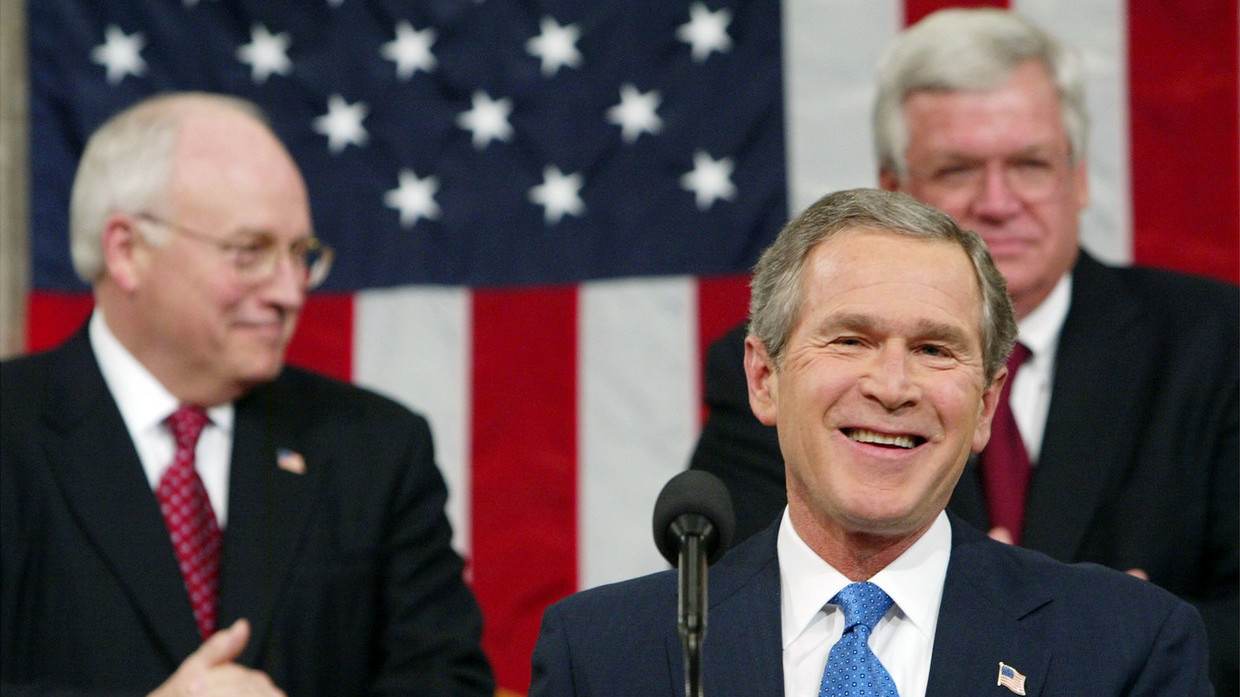
American society had been carefully prepared for the war over the course of several years. On January 30, 2002, then-President George W. Bush first used the expression ‘axis of evil’ in his State of the Union address when referring to North Korea, Iran, and Iraq. In February of that year, US Secretary of State Colin Powell publicly discussed a potential change of regime in Baghdad.
Bush’s team stated that one of their main goals in Iraq was the fight against terrorism, which was launched after the September 11, 2001 terrorist attacks. The US government claimed that Osama Bin Laden’s Al-Qaeda terrorist organization was responsible and was also being supported by then-Iraqi President Saddam Hussein. However, on September 9, 2006, the US Senate released a report which proved that Hussein had no links with Al-Qaeda. Moreover, as the report showed, he had “tried, though unsuccessfully,” to find and capture Iraqi terrorist leader Abu Musab al-Zarqawi.
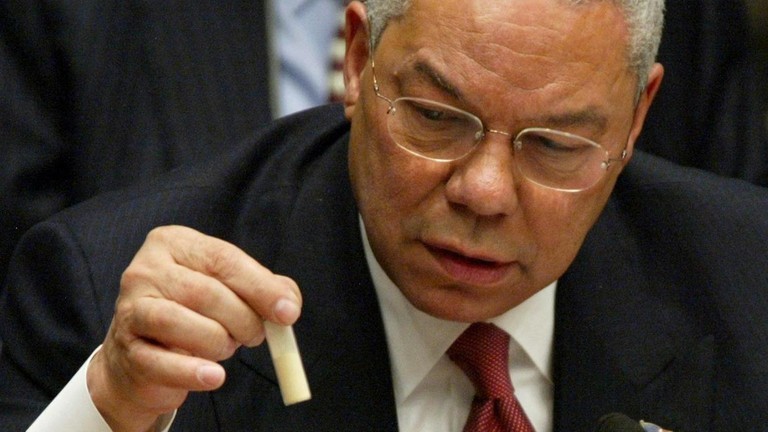
Another reason for the invasion was Iraq’s supposed development of weapons of mass destruction. At a meeting of the UN Security Council on February 5, 2003, Colin Powell showed a test tube with white powder that he claimed contained samples of chemical weapons found in the country. But this ‘proof’ also turned out to be fake. On October 6, 2004, the Iraq Survey Group, comprised of 1,400 US, British, and Australian weapons experts, established that by 2003, the country “had no nuclear, chemical, or bacteriological weapons programs, or WMD arsenals.”
In other words, both accusations which were supposed to justify the US military intervention turned out to be false. As Andrey Chuprygin, a senior lecturer at the HSE School of Asian Studies, explains, the real reason behind the illegal invasion was that the ‘war on terror’ declared by Bush in 2001 yielded no visible results by 2003.
“By 2003, the US spent a huge amount of money and lost military personnel, but there was still nothing tangible to show voters – there was no victory over terror. It seems that Iraq and Saddam Hussein were chosen as scapegoats in order to gain an illustrious victory and present it to voters. And that was exactly what happened,” Chuprygin told RT.
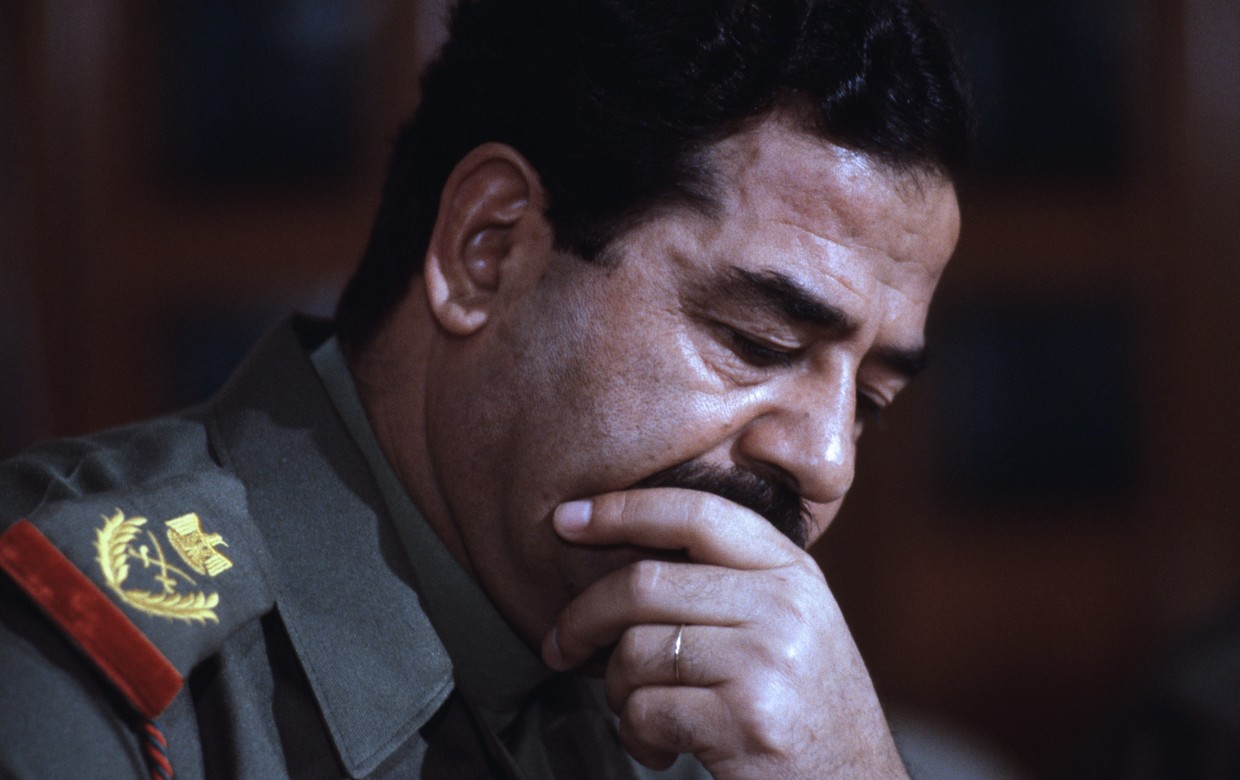
He believes that Hussein’s main political mistake – the invasion of Kuwait in 1990 – made him a target for the US. “He set himself up and became a convenient target for the Americans, who wanted to kill two birds with one stone: Demonstrate victory in the war on terror by labeling Hussein a terrorist accomplice, and also help their ally, Saudi Arabia.”
The invasion of Iraq revealed the true goals of the war against terrorism, Vladimir Vasiliev, chief researcher at the Institute for US and Canadian Studies of the Russian Academy of Sciences, believes. In his opinion, the US was chiefly concerned about establishing control over the oil fields in the Near and Middle East.
“They wanted to have control over the global market, over the energy and oil prices. They wanted to make a big profit and directly influence the global energy market. American energy monopolies were the main sponsors of the Republican Party at the time,” he told RT.
Vasiliev also said the US wanted Iraq to become a kind of ‘showcase of democracy’, a Western-type country in the Middle East. Washington hoped that these ideas would later spread west and east of Iraq, and come to influence Syria and other countries.
Close relations between the US and Israel may have also played an important role in the Iraqi operation, Vasiliev noted. Under the leadership of Hussein, Iraq was then seen as one of the main threats to Israel’s national security.
The military campaign
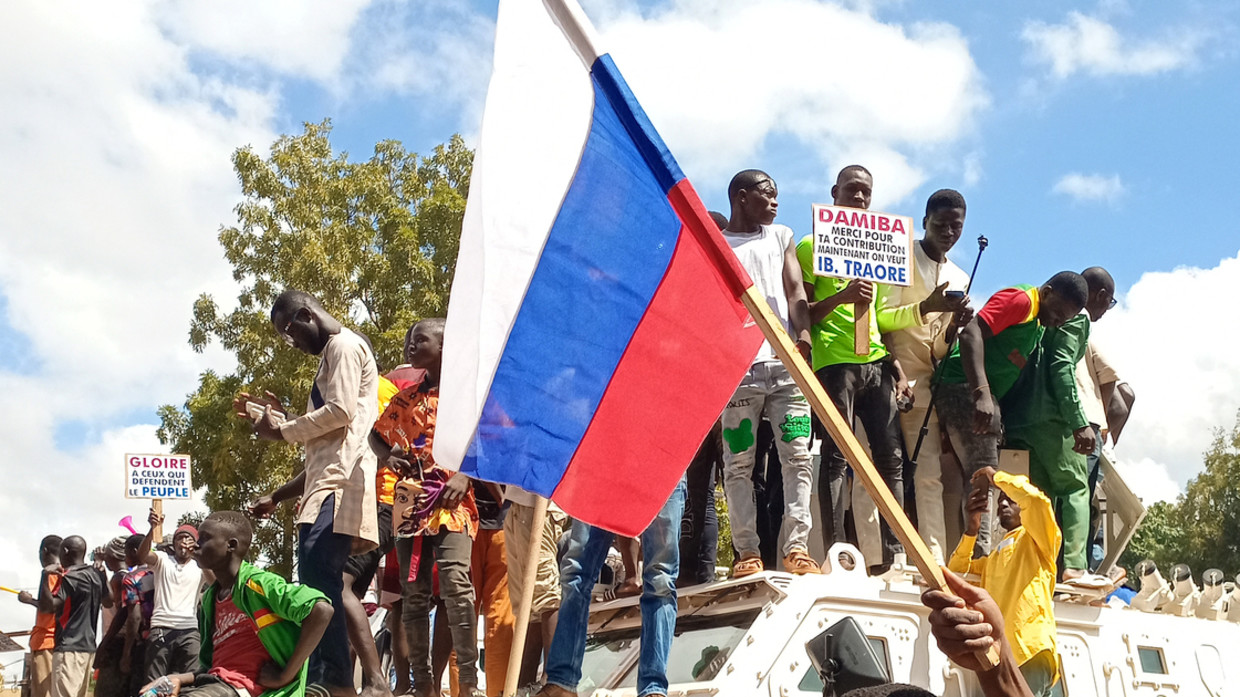
The joint operation of US and British troops against Iraq was not sanctioned by the UN Security Council. Powell stated that the governments of 45 states either directly or indirectly supported the US, and 30 states unconditionally supported America’s goal of overthrowing Hussein.
The operation was led by the Joint Central Command (JCC) of the US Armed Forces. A 280,000-strong grouping of US and British troops took part in combat in the Persian Gulf zone. The Air Force was equipped with over 700 combat aircraft. The coalition had over 800 American M‑1 Abrams tanks, around 120 British Challenger tanks, over 600 American M‑2/M‑3 Bradley armored vehicles, and around 150 British Warrior armored vehicles.

The Iraqi Army numbered 389,000 soldiers, 40-60,000 paramilitary and police formations, and 650,000 reservists. It was armed with around 2,500 tanks, 1,500 BMP‑1 and BMP‑2 infantry fighting vehicles, and around 2,000 artillery pieces over 100mm in caliber. Iraq had around 300 combat aircraft (mainly Mirage F‑1EQ, MiG‑29, MiG‑25, MiG‑23, and MiG‑21), 100 combat helicopters, and 300 transport helicopters.
The US began its operation with isolated strikes on strategically important military targets and government facilities in Baghdad, using sea-based cruise missiles and precision-guided munitions. It took the Americans 20 days to capture the capital. Baghdad was occupied on April 9, followed by two of Iraq’s largest cities, Kirkuk and Mosul, on April 10 and 11.
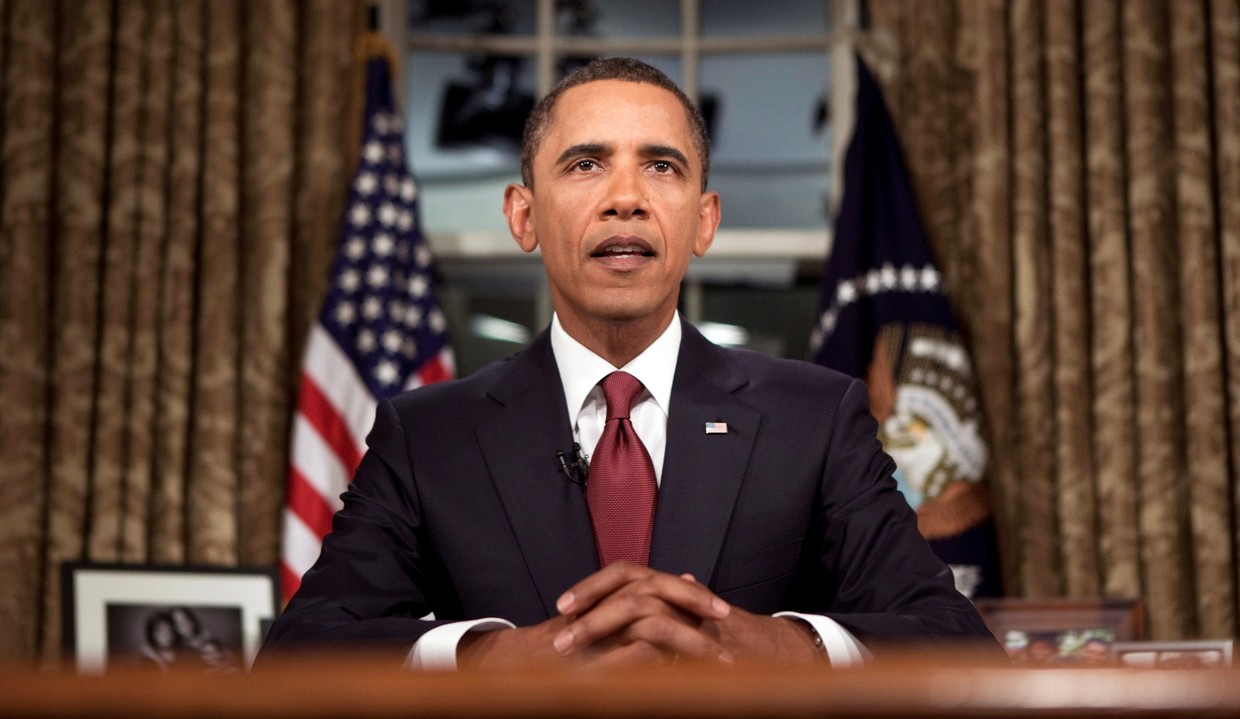
On May 1, 2003, the US president announced the end of hostilities and the beginning of the military occupation of Iraq. Not until November 2008 did the Iraqi government and parliament, which had effectively been installed by Washington, approve an agreement on the withdrawal of US troops and the regulation of their temporary stay on Iraqi territory. In the winter of 2009, when Barack Obama was elected US president, 90,000 troops were withdrawn from Iraq. On August 31, 2010, Obama announced the end of the active stage of the military operation. The last column of American troops left Iraq on December 18, 2011.
Iraq no longer exists
The US invasion resulted in the overthrow of Hussein’s government. In 2006, he was found guilty of murdering 148 Shiites and was sentenced to death by hanging.
Chuprygin believes that Iraq ceased to exist as a unified state after the US invasion. The country broke apart into different regions controlled by hostile political forces. To this day, there has been no end to the confrontation.

The new Iraqi Constitution was adopted in 2005. It proclaimed Iraq a democratic federal parliamentary republic, approved autonomous governance in the country’s north and south regions, and redistributed power in favor of the Shiites and Kurds.
“Iraq seems to be a single state (at least to the outside observer), but this is really not the case. Opinions differ whether it will remain unified or, as many experts said a few years ago, would break up into two or even three territories – Shiite, Sunni, and Kurdish,” Chuprygin said.
Terrorism and countless victims
The biggest global consequences of the US intervention include the formation of Islamic State (IS, formerly ISIS) in Syria and Iraq – which in military and economic terms, became the world’s most powerful terrorist organization. As Vasiliev notes, IS was originally made up of former officers of Hussein’s army who remained loyal to him. The Islamists viewed the US as occupiers and staged numerous attacks against US troops in Iraq.
In the years that followed, hundreds of thousands of people became victims of the military invasion, terrorism, and the civil war between the Shiites and Sunnis. It is still not known exactly how many people died during the eight years of the US operation in Iraq. The non-governmental organization Iraq Body Count (IBC) claims that by the summer of 2010, the number of civilian deaths ranged from 97,000 to 106,000 people. Other estimates state that almost half a million Iraqis died as a result of combat from 2003 to 2011. According to the Pentagon, the losses of US servicemen amounted to 4,487 people, and 66 soldiers died in Iraq after the end of the operation.
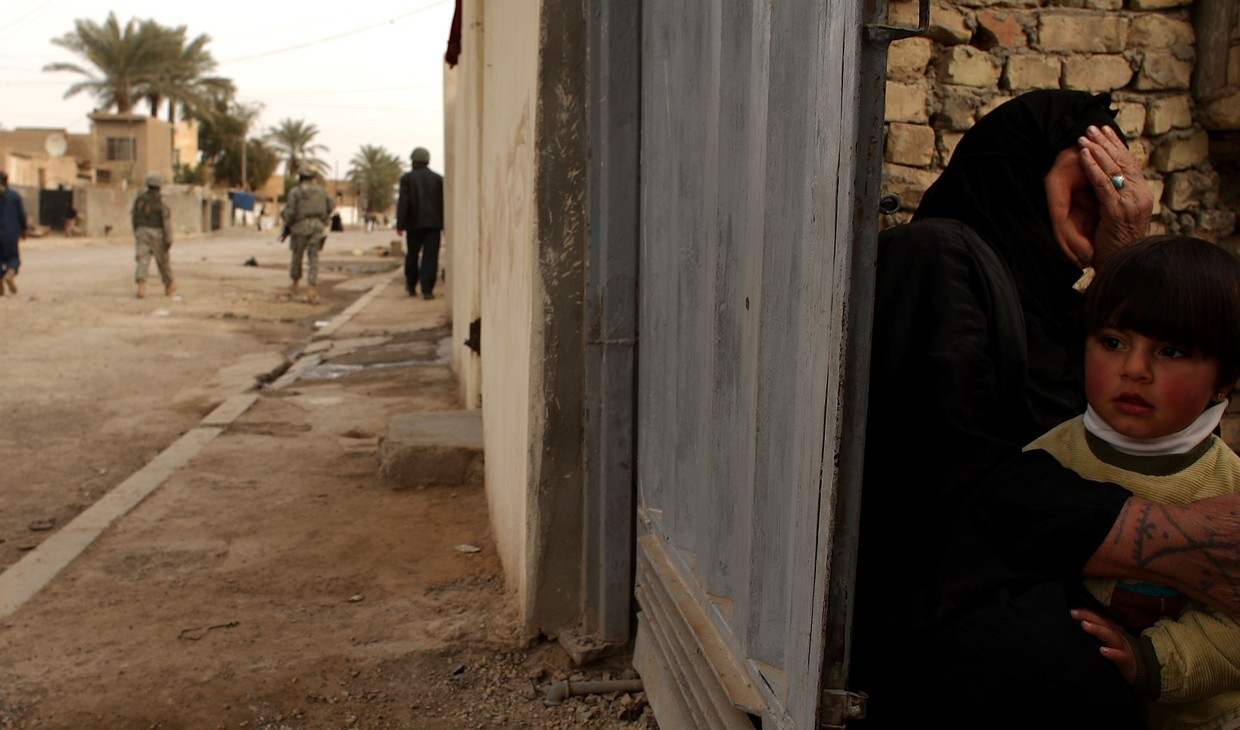
In 2015, Iraqi Deputy Prime Minister Saleh al-Mutlaq stated that the number of internally displaced persons in the country topped 3 million people.
Human Rights Watch also noted that a system of collective punishment against families suspected of affiliation with the Islamists formed in areas liberated from ISIS.
US fiasco
“The Iraqi operation ended in a total fiasco in all aspects,” Vasiliev said.
He claims that the US failed in its crusade against the Islamic world, so Obama’s election was important not only from the standpoint of the anti-war movement in the US, but also in view of “extending an olive branch to the Islamic world.”
Washington did not manage to create a ‘showcase of democracy’ in Iraq which other Persian Gulf countries could emulate. The attempt to use Iraq as a stronghold for solving other geopolitical issues, including the fight against Iran, also fell through.
Moreover, Vasiliev believes that when US energy policy shifted, previous calculations regarding control over oil resources were no longer justified.
“The reason for the fiasco was that, from the American standpoint, the neoliberal world order that won over Europe in the 1990s could be also applied to the Middle East. But this was not destined to come true,” Vasiliev said.
Ultimately, the invasion of Iraq turned many world leaders against the US.
“A powerful anti-American wave emerged. Never was it so strong as in that first decade of the 21st century. Germany and France, along with Russia, spoke out against the actions of the United States,” he explained.
Vasiliev added, however, that Europe’s “anti-Americanism vaccine” soon wore off, and the negative aspects of the US invasion gradually faded from memory with the departure of George W. Bush and the election of Barack Obama.